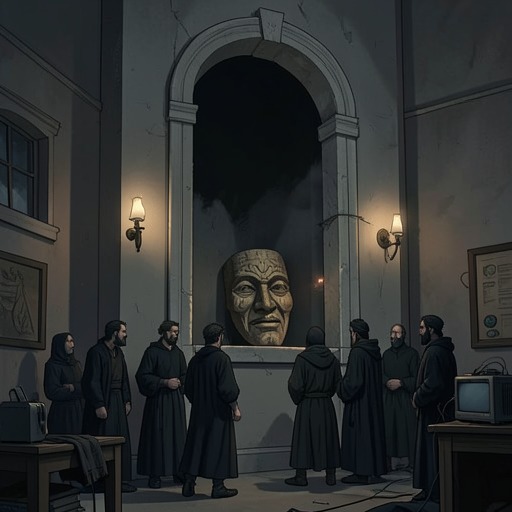
Nicolas’s Stradivarius violin
The Vampire LestatNicolas’s Stradivarius violin is the instrument Lestat recovers from the old dressing room and brings to Nicolas in the theater. Its return draws Nicolas into playing once more and precedes his declaration of the Theater of the Vampires, so the violin serves not merely as a keepsake but as the means by which a lost artistic life briefly becomes active again.
Identity and History
The violin is the Stradivarius Lestat had bought for Nicolas with what he calls the “coin of the realm.” When Lestat returns to the theater, the instrument is hidden beneath a bundled black coat in his former dressing room, inside a case distinct from the one they had brought from home. The room around it remains orderly and preserved: Lestat’s old coat, boots, theater paints, wig, letters from Gabrielle, newspaper clippings, and a half-full bottle of wine are still there. The violin belongs to this carefully arrested scene of former life, but among the room’s ordinary remnants it is also the object with the power to change what happens next.
Recovery in the Theater
Before entering the dressing room, Lestat sees Nicolas seated in the orchestra pit, apparently lifeless and translucent, and remembers Gabrielle’s earlier description of feeling dead and unable to affect the mortal world. He looks for a violin near Nicolas but finds none, leaving open the possibility that music might still reach him. The recovery of the instrument supplies that missing possibility. Lestat opens its case, recognizes the Stradivarius, takes it out carefully, and tightens the bows’ horsehair as he had seen Nicolas do many times. He then carries it back to the stage and lights the candle footlights, while Gabrielle helps illuminate the wings.
Nicolas Plays Again
Lestat approaches Nicolas from behind and lowers the violin over his shoulder into his lap. Nicolas responds with a movement like a deep breath, then lifts one hand to the neck and the other to the bow. Lestat kneels beside him and asks him to play. Nicolas first holds the instrument to his ear and stands facing the empty theater, as he once did at the intermezzo. He then draws the bow across the strings, and the music fills the hall. The scene gives the violin a direct role in the reunion: Lestat can offer it, but Nicolas must take it up and make it sound.
The Theater’s New Identity
As he plays, Nicolas’s performance becomes a public naming of what the troupe will be. He raises the violin and proclaims, “I GIVE YOU THE THEATER OF THE VAMPIRES! THE THEATER OF THE VAMPIRES! THE GREATEST SPECTACLE OF THE BOULEVARD!” The others answer with applause, cries, embraces, and dancing. The instrument thus stands at the hinge between the old theater Lestat and Nicolas once shared and the vampires’ new spectacle. It does not erase Nicolas’s estrangement or restore their former lives, but it enables a moment of artistic action and gives the gathered vampires a name for their collective performance.
Material Presence and Meaning
The violin’s significance comes from its physical passage through the scene: it has been bought for Nicolas, left among the objects in Lestat’s old room, found in darkness, prepared by Lestat, and placed into Nicolas’s hands. Each step depends on the instrument’s continued presence, not simply on memory or speech. Its recovery also contrasts with Nicolas’s stillness in the orchestra pit. The once-cherished object is neither a mere relic nor a guarantee of return; when Nicolas takes it and plays, it becomes a working instrument again, briefly joining his remembered identity as a performer to the theater’s transformed present.